World news today
Bird flu outbreaks recorded in Vietnam and Saudi Arabia
Outbreaks of different strains of bird flu were detected simultaneously in Vietnam and Saudi Arabia, the World Organization for Animal Health (WOAH) reports, citing data from relevant departments of both countries.
In Vietnam, an outbreak of highly pathogenic H5N6 avian influenza occurred in a village in the north of the country near the border with China. According to WOAH, of the 2,500 affected poultry viruses, 2,200 died and the remaining 300 were destroyed to prevent the spread of the disease.
In Saudi Arabia, an avian influenza strain of H5N8 strain has been affected by a chicken farm. As a result, 22.7 thousand birds died from the disease, and more than 385 thousand were destroyed in order to prevent the spread of infection outside the farm.
According to WHO, there is no information on cases of human infection with the H5N8 avian influenza virus.
Cases of human infection with the H5N6 virus have been recorded in China since 2014 more than 20 times, seven people died. At the same time, WHO noted that no cases of transmission of the disease from person to person have been identified.
Coronavirus Impact: Hyundai is stopping production in South Korea
The automaker Hyundai has announced a halt in production at the company's plants in South Korea. The reason is the lack of certain components that the company usually received from China.
US cruise ships switch to LNG
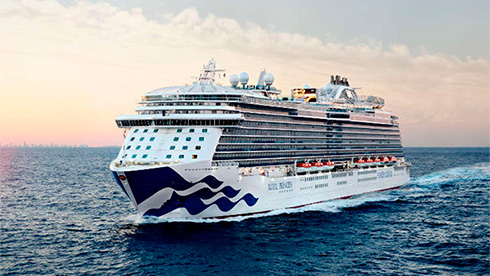 American cruise ships began to switch to liquefied natural gas (LNG), as a cleaner and more economical form of fuel.
Using LNG on cruise ships will help reduce emissions, help the industry meet new IMO-2020 environmental standards, and lower fuel costs, said Florida Ports Administration and the International Cruise Line Association (CLIA).
According to Brian Salerno, senior vice president of marine policy at CLIA, the use of LNG will also improve visibility, as passengers will be spared from the smoke coming from ship chimneys.
“I think that throughout the marine world we will see a wider use of LNG on all types of vessels,” Salerno said. “In the next five years, there will be many new cruise liners using LNG as fuel.”
Canaveral will be the first port in eastern central Florida to serve LNG cruise ships. It will be followed by Port of Miami, Port Everglades at Fort Lauderdale and Port Palm Beach at Riviera Beach. Salerno said he knows nothing about ports outside Florida preparing to bunker LNG cruise ships, adding that 70% of the US cruise industry is based in Florida.
The first cruise ship in the United States to use LNG will be Carnival Mardi Gras, which is being built in Finland and is expected to begin operations at the port of Canaveral in November. New vessels designed to use LNG as fuel, according to Salerno, cost from $ 1 billion each.
According to Tom Streng, Carnival Corp's senior vice president of maritime affairs, the switch to LNG was driven by demands from environmental groups and the European Union to reduce greenhouse gas emissions and other harmful substances.
According to a recent report by the US Congressional Research Service (CRS), the cost of energy produced by burning LNG is 24% lower than the cost of burning marine fuel oil. However, the document notes that the installation of an LNG engine could increase the cost of the new liner by about $ 5 million.
The CRS report also noted that reducing pollution from the use of LNG is absolutely real. However, natural gas production has a poorly understood effect on greenhouse gas emissions. For example, methane emission during fracking.
The cost of building ships using LNG is only slightly higher than the construction of fuel oil ships, Strand said. According to him, additional investments fall on special onboard fuel tanks, their enhanced thermal insulation and training of crews on how to handle supercooled fuel.
Cruise ship operators in the United States have ordered 26 new LNG carriers. The largest customers are Carnival, Disney Cruise Line and Royal Caribbean International, upi reports.
US presidential election officially kicks off - Democrats begin their primaries
On February 3, in Iowa, representatives of the Democratic Party began intra-party elections to determine the candidate who would represent the political force in the 2020 presidential election. Formally, a vote in Iowa marked the beginning of the official start of the election campaign, Channel 24 reports .
Since 1972, traditionally the first polls have been conducted in this state itself.
These elections are also called "focuses", which in addition to Iowa are still in the states of Nevada and Wyoming. The other 47 states have so-called "primaries." The difference between parimerizes and caucus is that the former provide for voting with ballots, and the latter literally with their own bodies.
In the "caucus" involved tens of thousands of residents. A sophisticated electoral system counts the results of more than 1,600 small congresses to determine 41 national delegates, of which the party candidate will ultimately be selected in June 2020.
Interestingly, this year the “focuses" in Iowa were accompanied by a scandal related to the delay in the publication of election results. The organizers of the “focuses” could not count the votes and complained about technical problems with the mobile application for counting. The party headquarters was assured of the absence of a hacker attack or other interference. At the same time, the candidate teams stated that they had problems when they sent the voting results through the new application. Some also encountered problems on the voice line when trying to communicate the results.
According to exit polls, the “focuses” in Iowa were won by Sen. Bernie Sanders, who received 29.66% of the vote. But one of the leaders of the Democratic Party for President Joe Biden received only the fourth result in Iowa with the support of 12.37%.
Recall that in the US, presidential elections are held in several stages:
- on the first party, they select candidates within themselves (Democrats - their candidate, Republicans - their own). Other parties or independent candidates are also identified.
- on the second - voters choose electors: a certain number of electors from a particular state in accordance with the number of its population.
- At the third stage, the electors are already choosing a new president and vice president of the United States. Electors cast their ballots for the candidate who received the most support from the people in the state.
Such a system exists because it is important for the United States that it is not the majority of the population that chooses the country's leader, but that most states support it.
The candidate from the Republican Party is the current president of the United States, Donald Trump, so for now the Democrats are actually determined by his opponent.
Recall that the presidential election in the United States will be held on November 3, 2020. This will be the 59th election of the head of state in the history of the country.